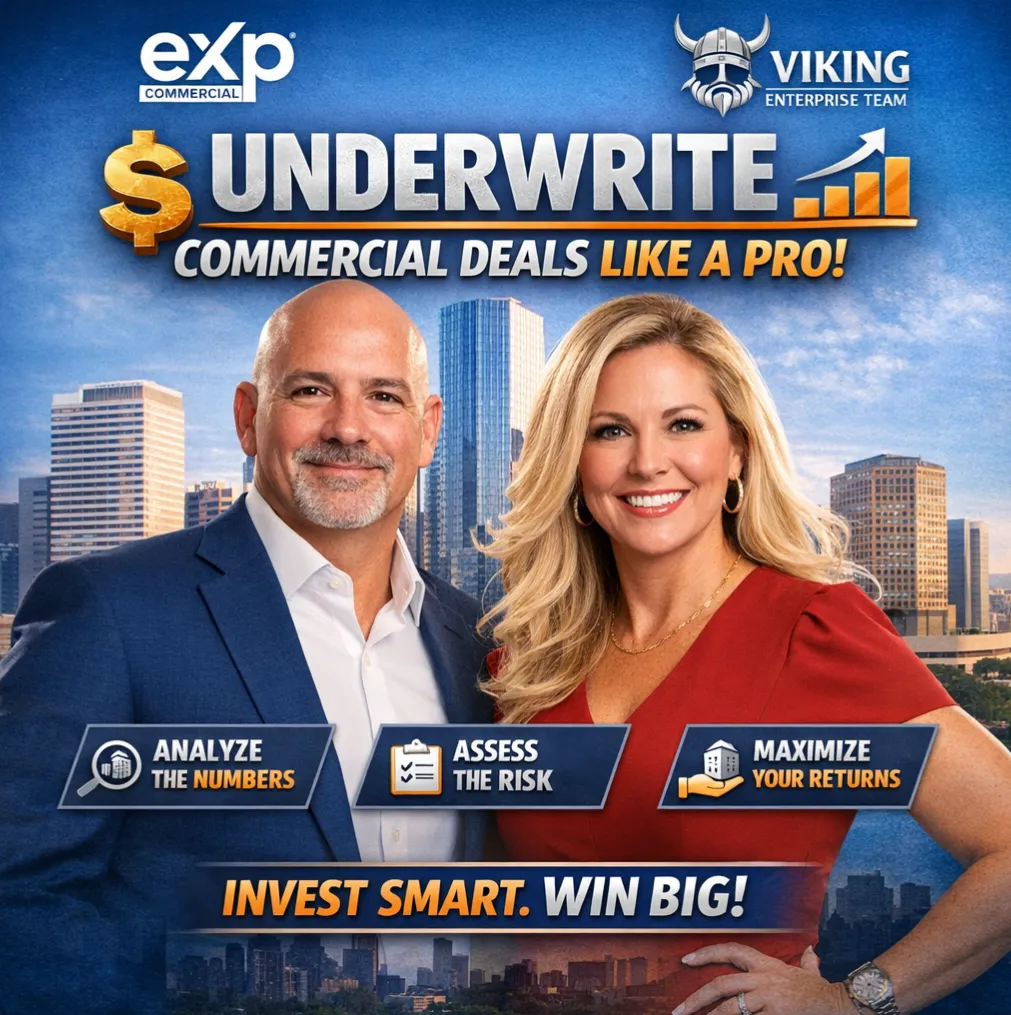
📊 Underwriting a Commercial Deal Like a Pro: How Investors Really Analyze CRE 💼
📊 Underwriting a Commercial Deal Like a Pro: How Investors Really Analyze CRE 💼
🏢 Underwriting Commercial Real Estate Deals Like a Pro: Numbers, Risk & Returns 📈
Underwriting a Commercial Deal Like a Pro
Underwriting is where commercial real estate deals are truly won—or quietly lost. The purchase price might get the attention, but professional investors and lenders focus on cash flow, risk, and durability. If you want to underwrite commercial real estate like a pro, you must think the way lenders, equity partners, and institutional buyers do.
This guide walks through the real-world underwriting framework used by experienced investors and commercial lenders.
Step 1: Start With the Income—Not the Asking Price
Professional underwriting always begins with Net Operating Income (NOI), not the broker’s pro forma.
Key income checks include:
·In-place rents vs. market rents
·Lease terms and expiration risk
·Tenant credit quality
·Vacancy and credit loss assumptions
Overestimating income is the fastest way to overpay for a deal.
Step 2: Normalize Expenses Like a Lender
Many deals look good on paper because expenses are understated.
Professionals normalize:
·Property taxes (post-sale reassessment)
·Insurance (especially in Texas)
·Repairs & maintenance
·Management fees (even if self-managed)
·Reserves for capital expenditures
If expenses look “too clean,” they probably are.
Step 3: Stress-Test the NOI
Smart underwriting assumes things will go wrong.
Run scenarios for:
·Higher vacancy
·Slower lease-up
·Expense inflation
·Rent stagnation
·Tenant rollover risk
If the deal only works in a perfect scenario, it is not a professional deal.
Step 4: Understand Debt Before You Lock the Deal
Financing is not an afterthought—it is part of underwriting.
Key lender metrics include:
·DSCR (Debt Service Coverage Ratio)
·Debt Yield
·Loan-to-Value (LTV)
·Interest rate sensitivity
Many commercial deals fail because buyers underwrite with hypothetical debt, not actual lender terms.
Step 5: Analyze Cash Flow, Not Just Cap Rate
Cap rate is a starting point—not the answer.
Professionals focus on:
·Cash-on-cash return
·Breakeven occupancy
·Refinance risk
·Exit cap sensitivity
A lower cap deal with strong financing can outperform a higher cap deal with weak structure.
Step 6: Know Your Exit Before You Buy
Every professional underwrite includes an exit strategy:
·Who is the buyer at sale?
·What cap rate will they require?
·What condition will the asset be in?
·Is the value creation realistic?
Hope is not an exit strategy.
Step 7: Align the Deal With the Right Capital Stack
Great deals fail when capital is mismatched.
Professional underwriting considers:
·Equity expectations
·Preferred returns
·Refinance windows
·Hold period discipline
The right structure can turn an average deal into a strong one.
Final Thought: Underwriting Is a Skill—Not a Spreadsheet
Software helps, but judgment wins deals.
The best investors combine:
·Conservative assumptions
·Lender-first thinking
·Market awareness
·Discipline on price
If you want to underwrite commercial deals like a pro, think like the person funding the deal—not the person selling it.
If you want a second set of eyes on a deal—or want help aligning financing with your acquisition strategy—the Viking Enterprise Team at eXp Commercial is built for that conversation.
https://www.houstonrealestatebrokerage.com/
https://www.houstonrealestatebrokerage.com/houston-cre-navigator
https://www.commercialexchange.com/agent/653bf5593e3a3e1dcec275a6
http://expressoffers.com/[email protected]
https://app.bullpenre.com/profile/1742476177701x437444415125976000
https://author.billrapponline.com/
https://www.amazon.com/dp/B0F32Z5BH2
https://veed.cello.so/FOmzTty6oi9
https://buymeacoffee.com/vikingente3
https://creplaybookseries.billrapponline.com
https://creplaybook.billrapponline.com/
© 2023-2024 Bill Rapp, Broker Associate, eXp Commercial Viking Enterprise Team


