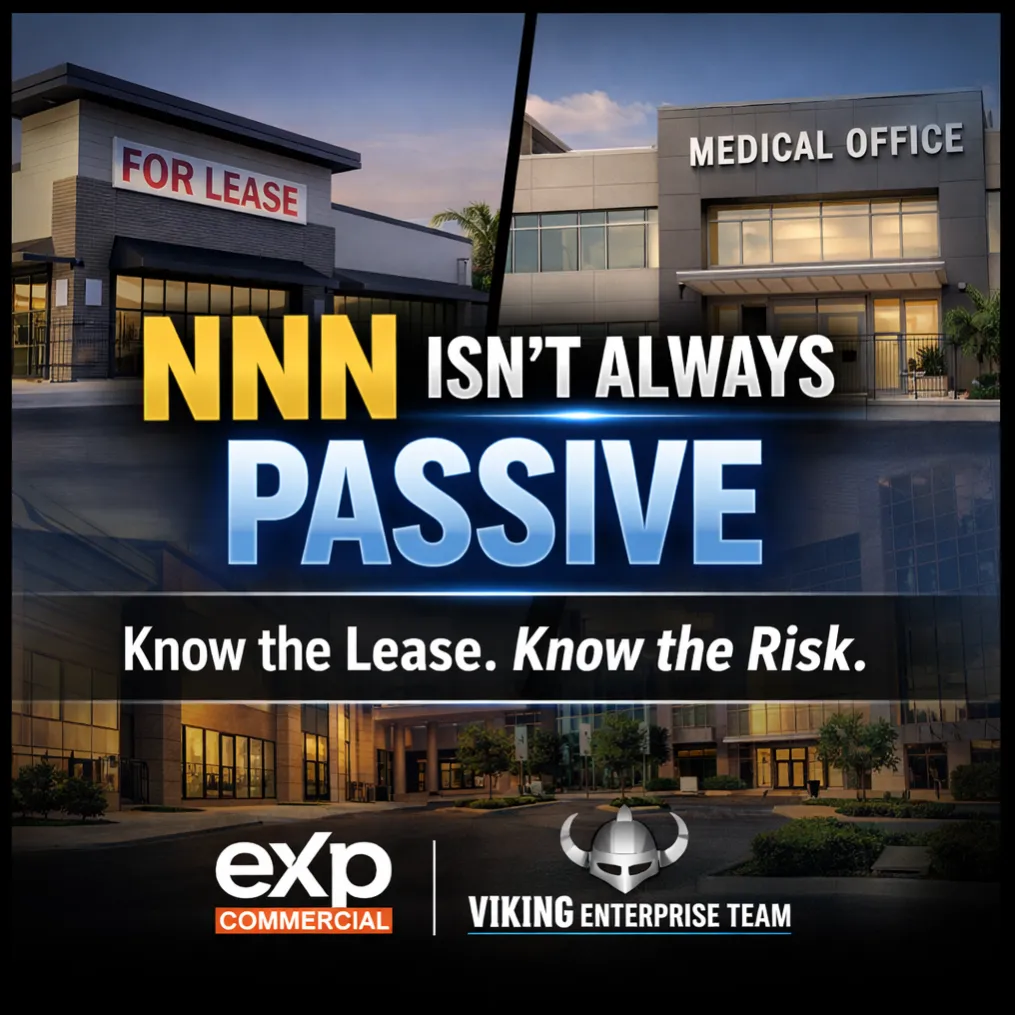
🏢 NNN Leases Explained: Why “Passive” Isn’t Always Passive 💰
🏢 NNN Leases Explained: Why “Passive” Isn’t Always Passive 💰
📉 Triple Net Leases Aren’t Truly Hands-Off—Here’s What Investors Miss 🧠
NNN Leases Explained: Why “Passive” Isn’t Always Passive
Triple Net (NNN) leases are often marketed as the holy grail of passive commercial real estate investing—especially for retail and medical investors seeking predictable income with minimal management. But in practice, not all NNN leases are created equal, and many investors discover too late that “passive” can still come with risk, surprises, and hidden costs.
Let’s break down what NNN leases really mean—and where investors need to pay closer attention.
What Is a True NNN Lease?
In a true NNN lease, the tenant is responsible for:
·Property taxes
·Property insurance
·All maintenance and repairs (including roof and structure)
The landlord collects rent and manages the lease—but ideally avoids day-to-day operating expenses. This structure is most common with national credit tenants, long lease terms, and newer construction.
But here’s the catch: many leases labeled “NNN” are actually modified.
True NNN vs. Modified NNN: Know the Difference
A modified NNN lease may still pass expenses to the tenant—but with carve-outs:
·Roof or structural responsibilities retained by landlord
·Expense caps on CAM or taxes
·Exclusions for capital expenditures
·Management or administrative fees unreimbursed
These gaps create expense leakage, reducing net income and increasing owner involvement.
📌 Always read the lease—not the marketing brochure.
Expense Leakage: The Silent Return Killer
Expense leakage occurs when:
·CAM reconciliations lag or are disputed
·Property tax reassessments outpace tenant reimbursements
·Insurance deductibles fall on ownership
·Repairs exceed what the lease defines as “tenant responsibility”
For medical office and retail investors, this is especially critical. Older buildings, specialty build-outs, and single-tenant assets can all introduce hidden obligations.
Tenant Quality Matters More Than Lease Length
A 15-year lease sounds safe—until the tenant struggles.
Smart NNN investors prioritize:
·Tenant credit quality over headline cap rate
·Industry resilience (medical > discretionary retail)
·Unit-level profitability, not just corporate branding
A weaker tenant with a long lease can become a liability, not a safeguard.
Why Medical and Retail Investors Must Be Extra Careful
Medical and retail NNN assets are attractive—but nuanced:
·Medical tenants may negotiate specialized maintenance exclusions
·Retail tenants often push back on tax and CAM increases
·Lease assignability and renewal options affect exit value
NNN investing isn’t about avoiding work—it’s about understanding risk before you buy.
The Bottom Line
NNN leases can be powerful wealth-building tools—but only when:
·The lease structure is truly understood
·Expense responsibilities are clearly defined
·Tenant strength is properly underwritten
📊 Passive income comes from clarity, not assumptions.
If you’re evaluating a retail or medical NNN opportunity, review the lease like an underwriter—not a marketer.
https://www.houstonrealestatebrokerage.com/
https://www.houstonrealestatebrokerage.com/houston-cre-navigator
https://www.commercialexchange.com/agent/653bf5593e3a3e1dcec275a6
http://expressoffers.com/[email protected]
https://app.bullpenre.com/profile/1742476177701x437444415125976000
https://author.billrapponline.com/
https://www.amazon.com/dp/B0F32Z5BH2
https://veed.cello.so/FOmzTty6oi9
https://buymeacoffee.com/vikingente3
https://creplaybookseries.billrapponline.com
https://creplaybook.billrapponline.com/
© 2023-2024 Bill Rapp, Broker Associate, eXp Commercial Viking Enterprise Team


