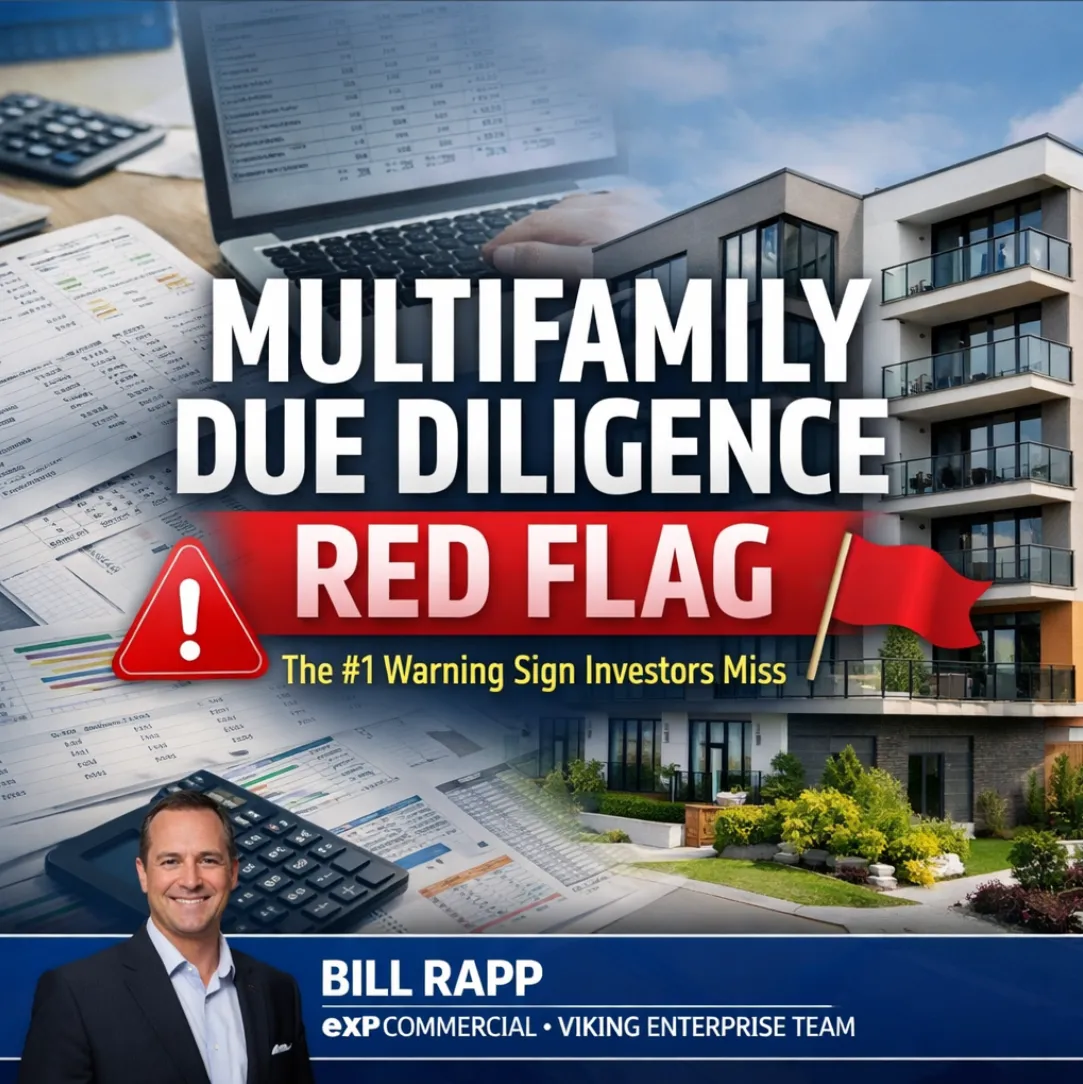
🏢 The #1 Multifamily Due Diligence Red Flag Every Investor Must Spot Before Closing 🚩
🏢 The #1 Multifamily Due Diligence Red Flag Every Investor Must Spot Before Closing 🚩
📊 Multifamily Investing Secrets: The One Due Diligence Red Flag That Destroys Deals 💰
The #1 Multifamily Due Diligence Red Flag Investors Must Catch Before Closing
Multifamily real estate is one of the most attractive commercial real estate investments available today. Investors are drawn to apartments because of consistent rental demand, scalable operations, and the ability to increase value through improved management.
But even experienced investors occasionally overlook a critical issue during due diligence.
The single biggest red flag in multifamily acquisitions is inaccurate or inflated financials.
If the income and expense numbers presented during marketing don’t match reality, the investment may look profitable on paper—but fail in real life.
Understanding how to identify this issue can protect investors from overpaying and preserve long-term returns.
Why Multifamily Financials Can Be Misleading
When a property is marketed for sale, the seller typically provides a Trailing 12-Month (T-12) operating statement and a rent roll. These documents form the basis of underwriting and valuation.
However, these financial reports can sometimes be:
·overly optimistic
·missing key expenses
·based on pro-forma assumptions rather than historical performance
In many cases, investors are unknowingly underwriting a property based on numbers that won’t actually occur after closing.
The #1 Red Flag: Expenses That Are Too Low
The most common warning sign during multifamily due diligence is underreported operating expenses.
Some sellers present financials that omit real operating costs such as:
• property management
• payroll
• maintenance reserves
• capital expenditures
• utilities
• insurance increases
• property tax reassessments
When these expenses are added back into the underwriting model, the property’s Net Operating Income (NOI) can drop significantly.
And when NOI falls, the value of the property falls with it.
How This Impacts Property Value
Multifamily properties are typically valued using the capitalization rate (cap rate) formula.
Property Value = NOI ÷ Cap Rate
If a seller reports an NOI of $1,000,000 at a 5% cap rate, the property appears to be worth:
$20,000,000
But if due diligence reveals the real NOI is only $800,000, the value becomes:
$16,000,000
That’s a $4 million valuation difference caused entirely by incorrect expenses.
This is why experienced investors spend enormous effort verifying financials during the due diligence period.
How Professional Investors Verify Multifamily Financials
Sophisticated buyers don’t rely solely on the seller’s numbers. They verify income and expenses using multiple sources.
Common verification methods include:
Lease Audits
Reviewing individual leases to confirm rent amounts, concessions, and expiration dates.
Bank Statement Reviews
Comparing rent deposits against reported income.
Utility Bill Analysis
Verifying actual operating costs.
Property Tax Reassessment Modeling
Estimating how taxes will change after the property sells.
Market Rent Comparisons
Determining whether rents are truly achievable or artificially inflated.
These steps ensure investors understand the true operating performance of the property.
Why This Matters for Financing
Lenders also scrutinize property financials during underwriting.
Banks and commercial mortgage lenders evaluate several key metrics, including:
• Net Operating Income (NOI)
• Debt Service Coverage Ratio (DSCR)
• Loan-to-Value ratio (LTV)
If due diligence reveals lower income or higher expenses, the lender may reduce the loan amount—or decline the financing entirely.
That can force buyers to raise more equity or renegotiate the purchase price.
Multifamily Investing in the Houston Market
In high-growth markets like Houston, Katy, and Fulshear, multifamily demand continues to remain strong due to:
• population growth
• job creation
• corporate relocation
• housing affordability pressures
However, competitive markets often lead investors to move quickly when deals appear.
This makes thorough due diligence even more important.
Investors who verify financial performance before closing protect themselves from unexpected operational challenges after acquisition.
The Bottom Line
The most dangerous multifamily investment mistakes happen when investors trust numbers without verification.
The #1 multifamily due diligence red flag is unrealistic or incomplete operating expenses.
Successful investors always verify financial performance before purchasing an asset.
Because in commercial real estate, the numbers determine the value—and the value determines the outcome of the deal.
Bill Rapp
Commercial Real Estate Broker
eXp Commercial – Viking Enterprise Team
Serving investors and business owners across:
📍 Katy
📍 Fulshear
📍 Houston
🔗 https://houstonrealestatebrokerage.com
📧 [email protected]
📞 281-222-0433
https://www.houstonrealestatebrokerage.com/
https://www.houstonrealestatebrokerage.com/houston-cre-navigator
https://www.commercialexchange.com/agent/653bf5593e3a3e1dcec275a6
http://expressoffers.com/[email protected]
https://app.bullpenre.com/profile/1742476177701x437444415125976000
https://author.billrapponline.com/
https://www.amazon.com/dp/B0F32Z5BH2
https://veed.cello.so/FOmzTty6oi9
https://buymeacoffee.com/vikingente3
https://creplaybookseries.billrapponline.com
https://creplaybook.billrapponline.com/
© 2023-2024 Bill Rapp, Broker Associate, eXp Commercial Viking Enterprise Team


