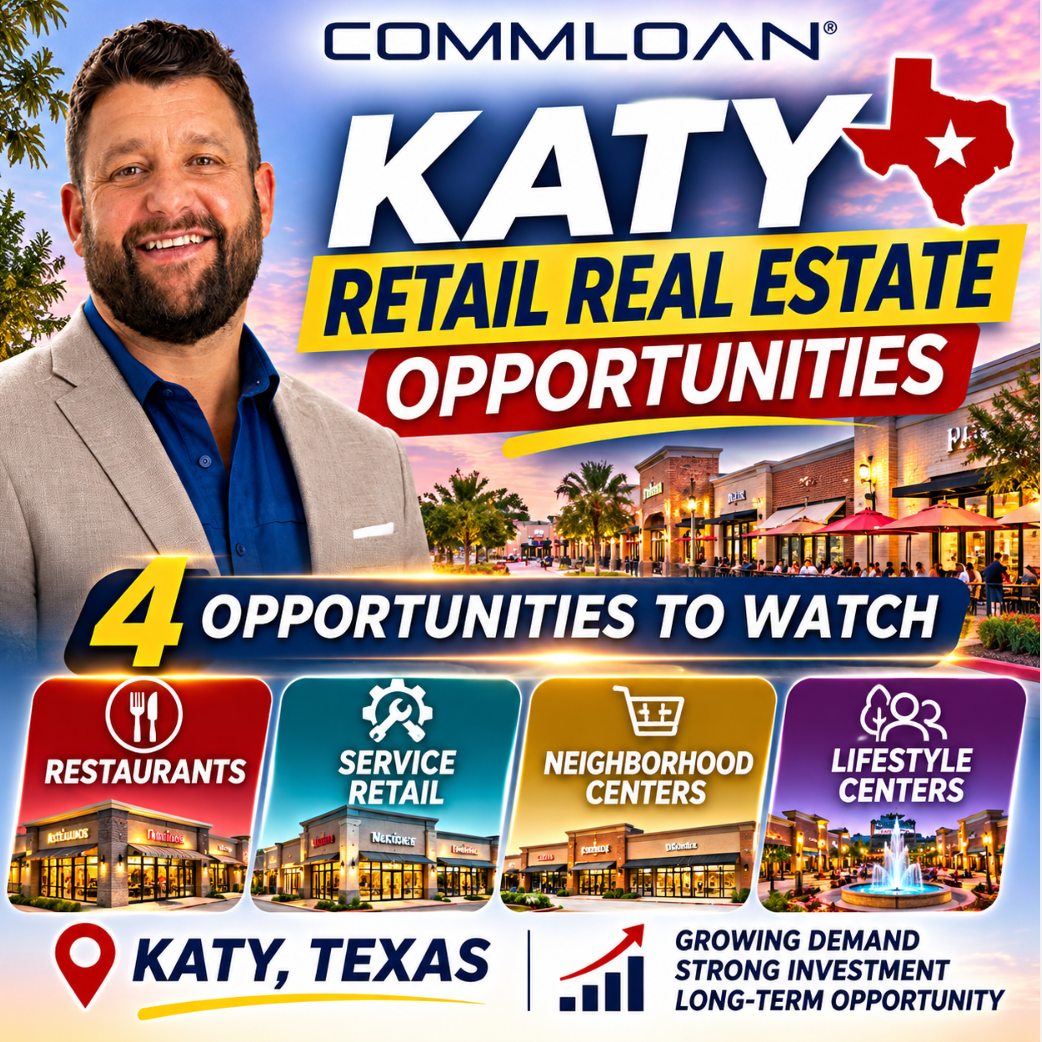
🏬 Katy Retail Real Estate Opportunities 📈
🏬 Katy Retail Real Estate Opportunities 📈
🔥 Katy Retail Real Estate: Where to Invest Next 💰
___________________________________________________________________________
🏬 Katy Retail Real Estate Opportunities 📈
Why restaurants, service retailers, neighborhood shopping centers and lifestyle developments are creating opportunities across Katy and West Houston.
By Bill Rapp, CCIM | eXp Commercial – Viking Enterprise Team
Katy, Texas, is experiencing a significant transformation in its commercial real estate landscape. Residential development, expanding transportation infrastructure, new master-planned communities and continued business investment are creating opportunities for retail property investors, developers, restaurant operators and entrepreneurs.
As residential growth expands west toward Fulshear and Brookshire and north toward Elyson, businesses are seeking locations that bring their products and services closer to consumers.
For commercial real estate investors and business owners, the opportunity is not simply to participate in Katy's growth. It is to identify the right property, tenant mix, location and financial structure before committing capital.
Four retail real estate categories deserve particular attention:
·Restaurants and quick-service restaurants
·Service-oriented retail
·Neighborhood shopping centers
·Lifestyle and mixed-use retail centers
Why Katy Is Attracting Retail Real Estate Investment
Katy benefits from several characteristics that support retail demand:
·Expanding residential communities
·Established master-planned developments
·Access to Interstate 10, Grand Parkway and Westpark Tollway
·Family-oriented consumer spending
·Growing demand for neighborhood conveniences
·Continued investment by national retailers and developers
Master-planned communities such as Jordan Ranch, Cane Island, Elyson, Sunterra, Tamarron and Cinco Ranch create potential customer bases for retailers seeking to establish or expand their West Houston presence.
One of the most visible examples is Texas Heritage Marketplace, a $400 million development near Interstate 10 and Texas Heritage Parkway expected to feature approximately 800,000 square feet of commercial space at completion.
Major retailers including Target and Lowe's have committed to the development, illustrating the scale of commercial investment occurring west of Katy.
However, increased development also means increased competition. Investors and operators must carefully evaluate local supply, consumer demand and occupancy costs.
1. Restaurant Real Estate Opportunities in Katy
Restaurants remain an important component of Katy's retail real estate market.
As neighborhoods expand, residents increasingly seek convenient dining options closer to home, creating potential opportunities for independent restaurants, franchise operators and national chains.
Restaurant concepts worth evaluating
·Quick-service restaurants (QSRs)
·Fast-casual dining
·Coffee shops and drive-through concepts
·Breakfast and brunch restaurants
·Family-oriented dining
·International cuisine
·Dessert and specialty food concepts
·Health-conscious restaurants
Restaurant real estate can offer investors long-term leases and attractive income potential. However, restaurant construction costs, operating expenses and tenant failure risks require careful underwriting.
Before leasing or purchasing restaurant space, operators should evaluate:
·Traffic counts and visibility
·Drive-through availability and approvals
·Parking capacity
·Grease traps and venting systems
·Electrical and gas capacity
·Existing commercial kitchen infrastructure
·Tenant improvement allowances
·Delivery access
·Competitive restaurant density
Second-generation restaurant space can be particularly attractive when existing infrastructure reduces construction costs and accelerates opening timelines.
The cheapest lease is not necessarily the most economical restaurant location.
2. Service Retail: Meeting Everyday Consumer Needs
Service-oriented retail is an important category for investors seeking tenants that rely heavily on physical locations.
Unlike many traditional merchandise retailers, service businesses frequently require customers to visit a property in person.
Examples include:
·Dental and medical practices
·Veterinary clinics
·Hair salons and barbershops
·Fitness studios
·Physical therapy clinics
·Tutoring and educational centers
·Childcare facilities
·Wellness businesses and medical spas
·Pet grooming
·Insurance and financial services offices
These businesses can generate recurring customer visits and complement restaurants, grocery stores and other neighborhood retailers.
Service retail can also provide opportunities for business owners to purchase their commercial space instead of continuing to lease.
Qualified owner-users may be able to utilize SBA 504, SBA 7(a) or conventional commercial real estate financing to acquire property and build long-term equity.
Investors should nevertheless evaluate tenant creditworthiness, industry competition, lease guarantees and the cost of replacing specialized tenants.
3. Neighborhood Shopping Centers
Neighborhood shopping centers are designed to serve the everyday needs of nearby residents.
A well-positioned neighborhood retail center may include a combination of restaurants, healthcare providers, fitness businesses, salons, professional services and convenience retailers.
These properties often benefit from repeat customer traffic and proximity to established or emerging residential communities.
What makes a neighborhood retail center attractive?
A successful center generally combines:
·Convenient access from major roads
·Strong residential demographics
·Adequate parking
·Complementary tenant categories
·Sustainable occupancy costs
·Diversified rental income
·Effective property management
For commercial real estate investors, multi-tenant retail centers can provide income diversification compared with single-tenant properties.
However, buyers must examine lease rollover schedules, tenant concentration, deferred maintenance, operating expenses and the financial strength of individual tenants.
A fully occupied shopping center is not necessarily a low-risk investment if several leases expire simultaneously or tenants are struggling financially.
4. Lifestyle Centers and Mixed-Use Retail Developments
Lifestyle centers are transforming traditional suburban shopping experiences into destinations that combine dining, shopping, entertainment and community gathering spaces.
LaCenterra at Cinco Ranch provides an established example of this approach in Katy.
Other developments, including Texas Heritage Marketplace, demonstrate how developers are incorporating outdoor spaces, restaurants and experience-oriented retail into newer commercial projects.
Lifestyle centers can benefit from:
·Longer customer visits
·Cross-shopping between businesses
·Community events
·Outdoor dining
·Entertainment-oriented tenants
·Stronger destination identity
These environments can create opportunities for boutique retailers, premium restaurants, fitness studios and wellness businesses.
However, lifestyle centers may also involve higher rental rates, common area maintenance expenses and construction standards.
Business owners should evaluate whether the additional customer traffic can justify the higher occupancy costs.
Katy Retail Real Estate Corridors to Watch
Several commercial corridors deserve attention when evaluating retail opportunities across the Greater Katy area.
Interstate 10 and Texas Heritage Parkway: Regional retail, restaurants, pad sites and large-scale commercial development.
Grand Parkway and FM 529: Emerging residential demand and neighborhood retail opportunities near Elyson.
FM 1463 and Fulshear: Neighborhood services, restaurants, healthcare and convenience-oriented retail.
Cinco Ranch and Westheimer Parkway: Established lifestyle retail, restaurants, healthcare and premium service businesses.
Old Town Katy: Independent businesses, specialty retailers, boutique shops and locally oriented restaurants.
Katy Asian Town and the Grand Parkway area: Specialty food concepts, international restaurants and destination-oriented retail.
Each corridor has a different customer base, competitive environment, rental structure and development pipeline. Site selection should be based on property-level research rather than population growth alone.
Understanding the Real Cost of Retail Space
Retail tenants frequently focus on the advertised rental rate without evaluating the complete occupancy expense.
Consider a business leasing 2,500 square feet of retail space:
·Base rent: $30 per square foot annually
·Estimated NNN expenses: $10 per square foot annually
·Total annual occupancy cost before other expenses: $100,000
·Monthly base rent and NNN expenses: approximately $8,333
This excludes utilities, business insurance, interior maintenance and certain other operating expenses.
A business generating $1 million in annual revenue would spend approximately 10% of its gross revenue on base rent and NNN expenses alone.
Understanding these economics before signing a lease can help business owners avoid expensive mistakes.
How Investors Can Create Value in Retail Real Estate
Consider a hypothetical neighborhood shopping center generating $250,000 in annual net operating income.
At a 7% capitalization rate, the property's indicated value would be approximately $3.57 million.
If the owner increases sustainable annual NOI to $275,000 through improved leasing, tenant retention and expense management, the indicated property value increases to approximately $3.93 million at the same capitalization rate.
That represents approximately $357,000 in potential additional property value.
However, actual value creation depends on market capitalization rates, leasing costs, capital expenditures, financing costs and the sustainability of rental income.
Successful retail investing requires more than collecting rent. It requires actively managing the physical property and the financial performance of its tenants.
Financing Retail Commercial Real Estate in Katy
Depending on the property and borrower, retail real estate financing options may include:
·Conventional commercial mortgages
·SBA 504 financing
·SBA 7(a) financing
·Commercial bridge loans
·CMBS financing
·Construction and development loans
·Sale-leaseback transactions
Qualified owner-occupied commercial purchases may be eligible for SBA financing with equity contributions starting around 10%, subject to program requirements and borrower qualifications.
Investment property financing typically requires closer examination of net operating income, debt service coverage, lease terms, tenant credit and property valuation.
Developing a financing strategy before negotiating a purchase contract can improve execution and reduce closing risk.
Frequently Asked Questions
Is Katy, Texas, a good market for retail real estate?
Katy offers established and emerging retail trade areas supported by residential development and commercial investment. Individual opportunities should be evaluated based on demographics, competition, rental economics, tenant demand and property fundamentals.
What types of retail businesses have opportunities in Katy?
Restaurants, healthcare providers, personal services, fitness studios, childcare facilities and neighborhood convenience retailers are categories worth evaluating.
What is a NNN retail lease?
A triple-net lease generally requires tenants to pay base rent plus allocated property taxes, property insurance and maintenance expenses, as defined by the lease.
Can I buy retail space instead of leasing it?
Yes. Qualified business owners may be able to purchase commercial retail space using SBA or conventional commercial real estate financing, depending on occupancy and other eligibility requirements.
Can I purchase a Katy shopping center through a 1031 exchange?
Qualifying investment properties may be acquired as replacement property through a properly structured 1031 exchange. Investors should coordinate with their qualified intermediary and tax advisors before completing transactions.
Find Your Next Retail Real Estate Opportunity in Katy
Whether you are opening a restaurant, expanding a service business, purchasing a shopping center, developing a retail pad or seeking a 1031 exchange replacement property, choosing the right commercial real estate strategy is essential.
At the eXp Commercial Viking Enterprise Team, we help investors, developers, property owners and business operators evaluate opportunities throughout Katy, Fulshear, West Houston and beyond.
Our approach combines commercial real estate brokerage, market analysis, investment underwriting and financing strategy to help clients make informed decisions.
Let's find the right commercial property for your business or investment portfolio.
Contact me for commercial property acquisitions, dispositions, landlord representation, tenant representation and commercial real estate financing guidance.
Additional research sources for publication:
·NewQuest – Texas Heritage Marketplace Development
·Katy Area EDC – Shopping and Dining
·Covering Katy News – Texas Heritage Marketplace October 2026 Update
Bill Rapp, CCIM
eXp Commercial — Viking Enterprise Team
📍 Serving Katy | Fulshear | Richmond | Brookshire | West Houston | Greater Houston
📧 [email protected]
☎️ 281-222-0433
🌐 HoustonRealEstateBrokerage.com
📍 eXp Commercial & eXp Realty
📅 Calendly.com/VikingEnterprise
https://www.houstonrealestatebrokerage.com/
https://www.houstonrealestatebrokerage.com/houston-cre-navigator
https://www.commercialexchange.com/agent/653bf5593e3a3e1dcec275a6
http://expressoffers.com/[email protected]
https://app.bullpenre.com/profile/1742476177701x437444415125976000
https://author.billrapponline.com/
https://www.amazon.com/dp/B0F32Z5BH2
https://veed.cello.so/FOmzTty6oi9
https://buymeacoffee.com/vikingente3
https://creplaybookseries.billrapponline.com
https://creplaybook.billrapponline.com/
© Bill Rapp, Broker Associate, eXp Commercial Viking Enterprise Team


