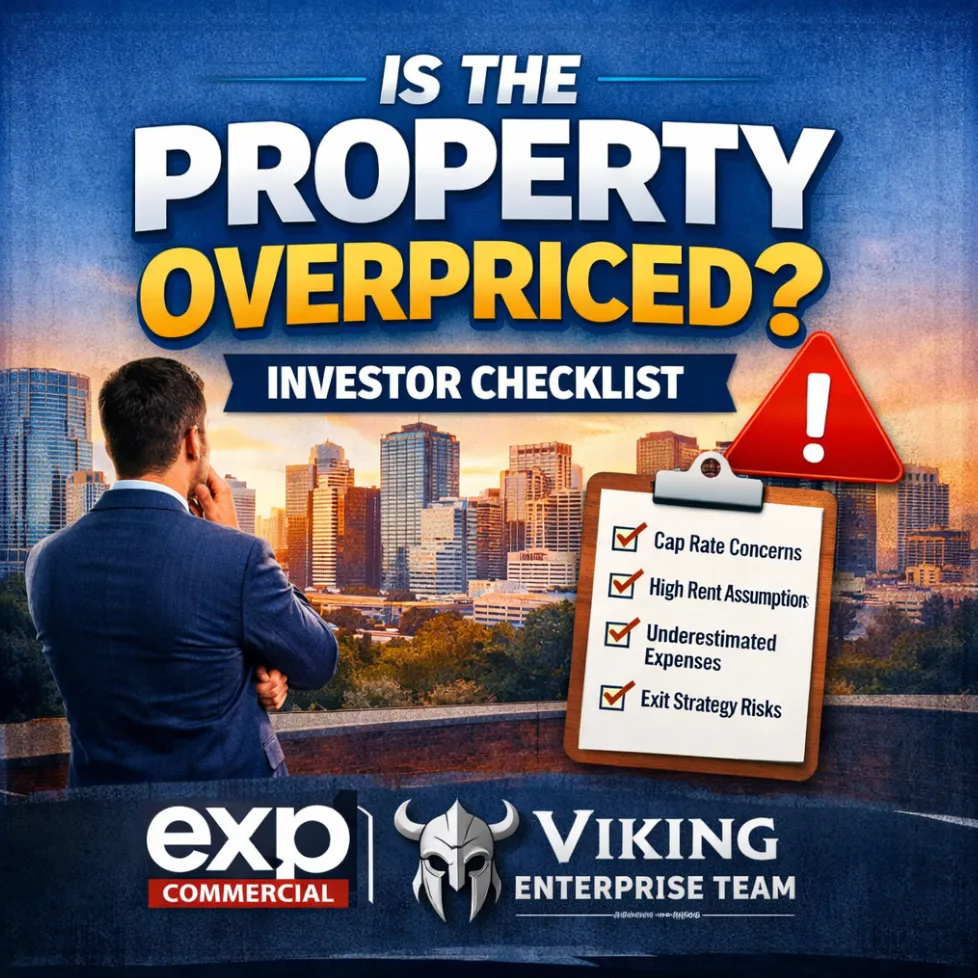
📊 Investor Checklist: How to Tell If a Commercial Property Is Overpriced 🏢
📊 Investor Checklist: How to Tell If a Commercial Property Is Overpriced 🏢
💰 Is This Deal Too Expensive? An Investor’s Checklist to Spot Overpriced CRE 🚨
Investor Checklist: How to Tell If a Property Is Overpriced
In competitive markets like Houston, Katy, and Fulshear, investors often ask the same question before making an offer: Is this property fairly priced—or am I about to overpay?
Overpaying doesn’t always mean a bad deal on day one. It often shows up later through weak cash flow, refinancing challenges, or limited exit options. This investor checklist walks you through the key indicators that signal when a commercial property may be overpriced—and how experienced investors protect themselves.
1. Cap Rate vs. Market Reality
Start by comparing the in-place cap rate to comparable assets in the same submarket.
Red flags include:
·Cap rates materially lower than market averages without strong rent growth
·Pro forma cap rates that rely on aggressive assumptions
·Pricing justified solely by “future upside”
If the property’s current income doesn’t support the price, you’re paying for hope—not performance.
2. Rent Levels Above Market
Above-market rents can look attractive on paper, but they often signal risk.
Check:
·Recent leases vs. market comps
·Tenant concessions or free rent periods
·Renewal probabilities at current rent levels
If rents are already stretched, future growth may be limited, and vacancy risk increases.
3. Expense Ratios That Look Too Good
Understated operating expenses are one of the most common ways deals are overpriced.
Watch for:
·Missing management fees
·Deferred maintenance
·Insurance or tax expenses below current market levels
Always normalize expenses to market standards before underwriting.
4. Weak Debt Coverage at Market Rates
A deal that only works with aggressive financing is often overpriced.
Key warning signs:
·DSCR below lender minimums at today’s rates
·Reliance on interest-only periods to make numbers work
·Cash-out assumptions that exceed conservative leverage levels
Strong deals survive conservative underwriting.
5. Exit Value Assumptions That Stretch Reality
Ask yourself:
·What cap rate will buyers demand in 5–10 years?
·Is the exit cap lower than today’s entry cap?
·Is value growth dependent on perfect execution?
If the exit only works in a best-case scenario, pricing may already be too high.
6. Seller Motivation (or Lack Thereof)
Not all sellers are motivated—and that matters.
Signs pricing may be inflated:
·Long time on market with minimal price movement
·“Testing the market” language
·No urgency tied to refinancing, partnership issues, or 1031 timing
Motivation often creates pricing flexibility.
7. Replacement Cost vs. Purchase Price
Compare the purchase price to replacement cost.
If you’re paying close to—or above—what it would cost to build new:
·The asset must offer location or income advantages
·Deferred maintenance becomes more critical
·Downside risk increases in a correction
Replacement cost acts as a pricing gravity point over time.
Final Thought: Discipline Beats Emotion
Overpriced properties don’t always look bad. They often look “almost right.”
Experienced investors rely on:
·Conservative assumptions
·Market-supported comps
·Financing stress tests
·Clear exit strategies
If a deal requires everything to go perfectly, it’s probably priced too aggressively.
https://www.houstonrealestatebrokerage.com/
https://www.houstonrealestatebrokerage.com/houston-cre-navigator
https://www.commercialexchange.com/agent/653bf5593e3a3e1dcec275a6
http://expressoffers.com/[email protected]
https://app.bullpenre.com/profile/1742476177701x437444415125976000
https://author.billrapponline.com/
https://www.amazon.com/dp/B0F32Z5BH2
https://veed.cello.so/FOmzTty6oi9
https://creplaybookseries.billrapponline.com
https://creplaybook.billrapponline.com/
© 2023-2024 Bill Rapp, Broker Associate, eXp Commercial Viking Enterprise Team


