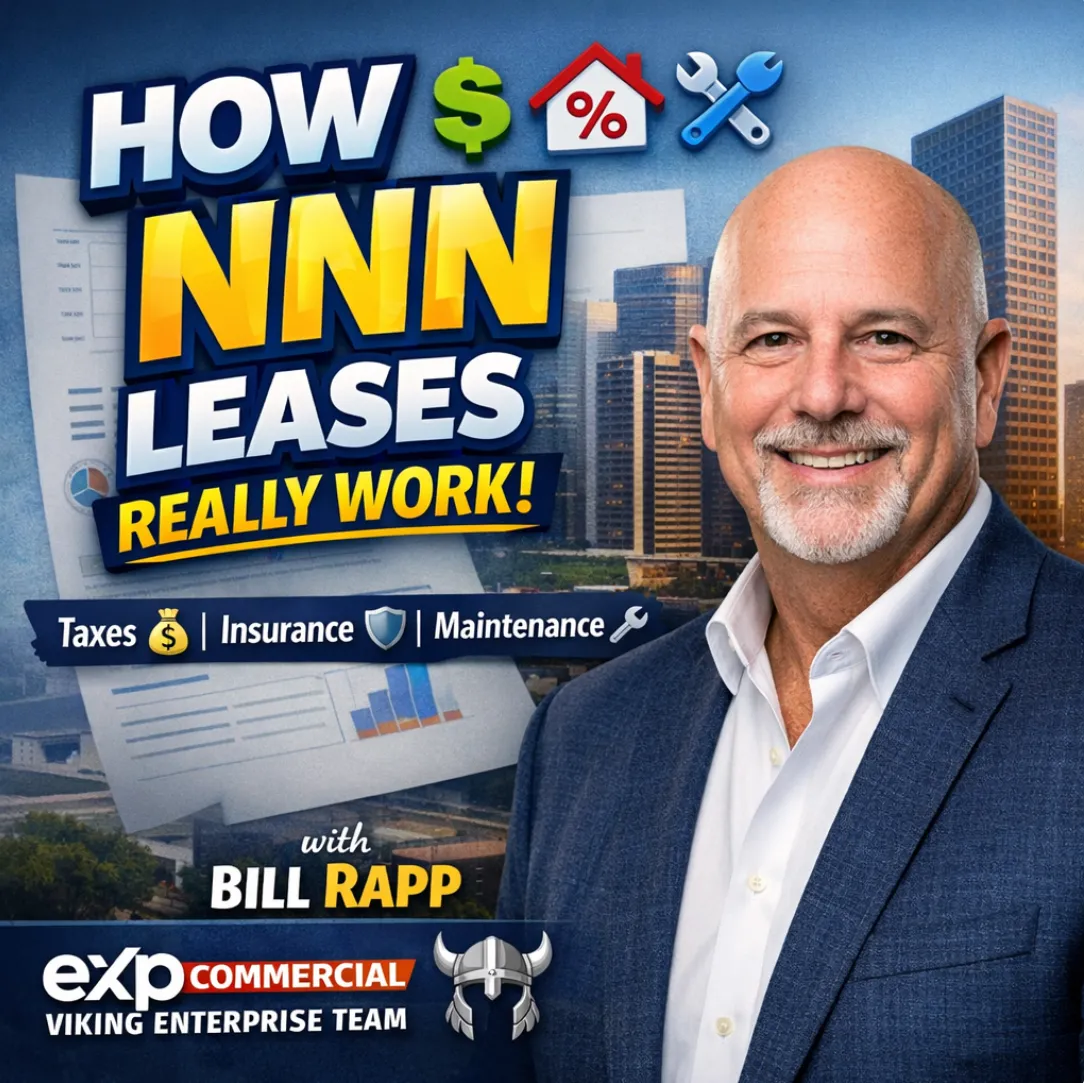
🏢💰 How NNN Leases Really Work (And Why Investors Love Them) 📊🔑
🏢💰 How NNN Leases Really Work (And Why Investors Love Them) 📊🔑
📈🏬 Triple Net (NNN) Leases Explained for Commercial Real Estate Investors 💼📉
How NNN Leases Really Work
Commercial real estate investors frequently pursue properties with Triple Net (NNN) leases because they offer predictable income, lower landlord responsibilities, and long-term tenant stability.
But despite their popularity, many investors and business owners misunderstand how NNN leases actually work.
Understanding the mechanics of a triple net lease can help investors evaluate risk, analyze returns, and structure smarter commercial real estate investments.
What Is a Triple Net (NNN) Lease?
A Triple Net lease, commonly referred to as NNN, is a commercial lease structure where the tenant pays most or all of the property's operating expenses in addition to base rent.
The “three nets” refer to:
• Property Taxes
• Insurance
• Maintenance (CAM – Common Area Maintenance)
Instead of the landlord covering these expenses, the tenant reimburses or directly pays them, significantly reducing the landlord’s operating costs.
This structure is one reason net lease investments are popular among passive commercial real estate investors.
How NNN Leases Work in Practice
A typical NNN lease includes three main payment components:
1. Base Rent
The tenant pays an agreed base rental rate per square foot.
Example:
$25 per square foot base rent
2. NNN Expenses (Operating Costs)
Tenants also pay their share of:
• Property taxes
• Property insurance
• Building maintenance
• Landscaping
• Parking lot maintenance
• Property management fees
• Snow removal (in colder markets)
These are usually billed as additional rent.
Example:
Base Rent: $25 / SF
NNN Expenses: $8 / SF
Total Rent Paid by Tenant: $33 / SF
3. Annual Rent Escalations
Most NNN leases include annual rent increases, typically:
• 2–3% per year
• Fixed dollar increases
• CPI-based adjustments
Escalations help landlords protect purchasing power against inflation.
Why Investors Love NNN Properties
NNN investments have become a cornerstone strategy for many commercial real estate portfolios.
Predictable Cash Flow
Because tenants cover operating expenses, the landlord receives more predictable income streams.
Lower Management Requirements
Triple net properties are often described as “mailbox money” investments because management responsibilities are minimal.
Tenants frequently handle maintenance and operational expenses.
Long Lease Terms
Many NNN properties have long-term leases, often ranging from:
• 10 years
• 15 years
• 20 years
Long leases create stable income and financing predictability.
Credit Tenant Stability
NNN properties often include national tenants such as:
• pharmacies
• grocery stores
• restaurants
• banks
• automotive service providers
Stronger tenant credit typically means lower investment risk.
Risks Investors Should Understand
Despite the advantages, NNN investments are not risk-free.
Smart investors always evaluate several key factors.
Tenant Credit Risk
If the tenant fails, the landlord may suddenly inherit:
• operating expenses
• property taxes
• insurance
• vacancy risk
Tenant financial strength matters.
Lease Structure Matters
Some NNN leases still include landlord responsibilities, especially for:
• roof replacement
• structural components
• parking lot resurfacing
Always review the actual lease language.
Location Still Drives Value
Even strong tenants struggle in weak locations.
Investors should always analyze:
• traffic patterns
• population growth
• nearby retail synergy
• demographic trends
Why NNN Leases Are Popular in Houston CRE
Markets like Houston, Katy, and Fulshear have seen strong demand for NNN investments because of:
• population growth
• expanding retail corridors
• strong consumer spending
• corporate relocation trends
These factors support long-term tenant demand and stable occupancy.
For many investors, NNN retail and service properties provide a balance of stability and income.
Final Thoughts
Triple net leases are one of the most widely used structures in commercial real estate — and for good reason.
They allow investors to:
• reduce operating complexity
• stabilize income streams
• hold long-term assets with less management
However, successful NNN investing requires careful evaluation of tenant credit, lease structure, and location fundamentals.
For investors looking to build reliable income through commercial real estate, understanding how NNN leases really work is essential.
https://www.houstonrealestatebrokerage.com/
https://www.houstonrealestatebrokerage.com/houston-cre-navigator
https://www.commercialexchange.com/agent/653bf5593e3a3e1dcec275a6
http://expressoffers.com/[email protected]
https://app.bullpenre.com/profile/1742476177701x437444415125976000
https://author.billrapponline.com/
https://www.amazon.com/dp/B0F32Z5BH2
https://veed.cello.so/FOmzTty6oi9
https://buymeacoffee.com/vikingente3
https://creplaybookseries.billrapponline.com
https://creplaybook.billrapponline.com/
© 2023-2024 Bill Rapp, Broker Associate, eXp Commercial Viking Enterprise Team


