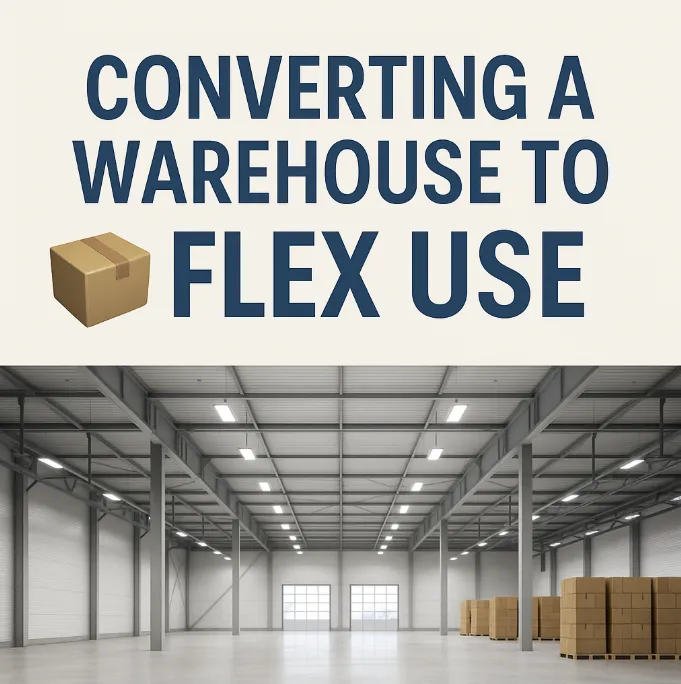
📦 From Warehouse to Wealth: Convert to Flex Space for Higher Returns 💼🏢
📦 From Warehouse to Wealth: Convert to Flex Space for Higher Returns 💼🏢
🏗️ Flex Use Conversion Guide: How to Transform a Warehouse for Maximum Value 💡💰
📦 Converting a Warehouse to Flex Use: A Smart Play for CRE Investors
As the commercial real estate landscape continues to shift post-pandemic, one trend stands out for savvy investors and business owners: converting warehouses into flex space. This strategy not only revitalizes underutilized properties but also unlocks new income potential with diversified tenant appeal.
What Is Flex Space?
Flex space (short for "flexible space") is a hybrid property type that blends warehouse, office, retail, and sometimes even light manufacturing uses under one roof. It’s particularly attractive to small-to-mid-sized businesses, e-commerce companies, startups, medical labs, and tradespeople.
Why Convert a Warehouse to Flex Use?
1. Market Demand – Flex space is hot in cities like Houston, Katy, and other fast-growing Texas metros. The rise in e-commerce, logistics, and specialty services has fueled demand for affordable, adaptable spaces.
2. Higher Income Potential – A warehouse with a single-use tenant may bring in $6–8/SF annually. Converted flex spaces with segmented office/showroom areas can lease for $12–18/SF, or more.
3. Broader Tenant Base – Instead of targeting one large tenant, you can attract a range of users — reducing vacancy risk and improving income stability.
4. Increased Property Value – Enhanced income = higher NOI = better valuations, especially attractive to 1031 buyers or investors seeking long-term hold strategies.
Key Steps to Convert a Warehouse to Flex Use
1. Zoning & Permitting
Start by confirming your warehouse is zoned for mixed or flexible commercial use. If not, you may need to apply for a variance or rezone the property. Consult your city’s planning office or a local zoning attorney.
2. Layout Planning
Hire a commercial architect to create a functional layout that could include:
o Private office suites
o Reception area or showroom
o Restrooms and breakroom
o Climate-controlled storage or production space
3. Infrastructure Upgrades
Consider adding:
o HVAC systems
o Additional plumbing/electrical
o Fire suppression systems
o Fiber internet connections
4. Parking & Accessibility
Flex tenants often require more parking than warehouse users. Confirm your site meets ADA and city parking requirements.
5. Financing the Project
Commercial renovation loans or SBA 504 loans are great tools to fund your conversion. Partnering with a commercial mortgage broker can help you structure financing based on projected cash flow post-conversion.
Real-Life Example from Houston
A 12,000 SF warehouse in the Energy Corridor was converted into four 3,000 SF flex units. Each now rents for $14/SF NNN, up from the previous $7/SF. The owner more than doubled their gross income while increasing resale value by over $1.2 million.
Final Thoughts
Converting a warehouse to flex use isn’t just a remodel — it’s a strategic repositioning. Whether you're an investor looking to boost NOI or a business owner wanting flexible space to grow, this transformation can deliver serious ROI.
https://www.houstonrealestatebrokerage.com/
https://www.houstonrealestatebrokerage.com/houston-cre-navigator
https://www.commercialexchange.com/agent/653bf5593e3a3e1dcec275a6
http://expressoffers.com/[email protected]
https://app.bullpenre.com/profile/1742476177701x437444415125976000
https://author.billrapponline.com/
https://www.amazon.com/dp/B0F32Z5BH2
© 2023-2024 Bill Rapp, Broker Associate, eXp Commercial Viking Enterprise Team


